Care & shipping
Getting the animal home safely.
Live animals are not ordinary parcels, and we don't treat them like one. Here is exactly how a shipment works and what we guarantee.
We agree a date first
Nothing ships on impulse. We look at the forecast at both ends and pick a window where the animal won't sit in dangerous temperatures. If the weather turns, we postpone — a delayed gecko is better than a dead one.
Overnight, insulated, tracked
Animals travel overnight in an insulated box with a heat or cool pack sized to the season. You get the tracking number the morning it leaves, and a text from us so you know it's on the way.
Someone must receive it
Shipments require an adult signature or a hold-for-pickup at your local depot. An animal left on a doorstep in July is the single most common way these deliveries go wrong.
Live arrival, guaranteed
If an animal doesn't arrive alive and healthy, send photos within two hours of delivery and we refund the full price or replace it — your choice, no haggling.
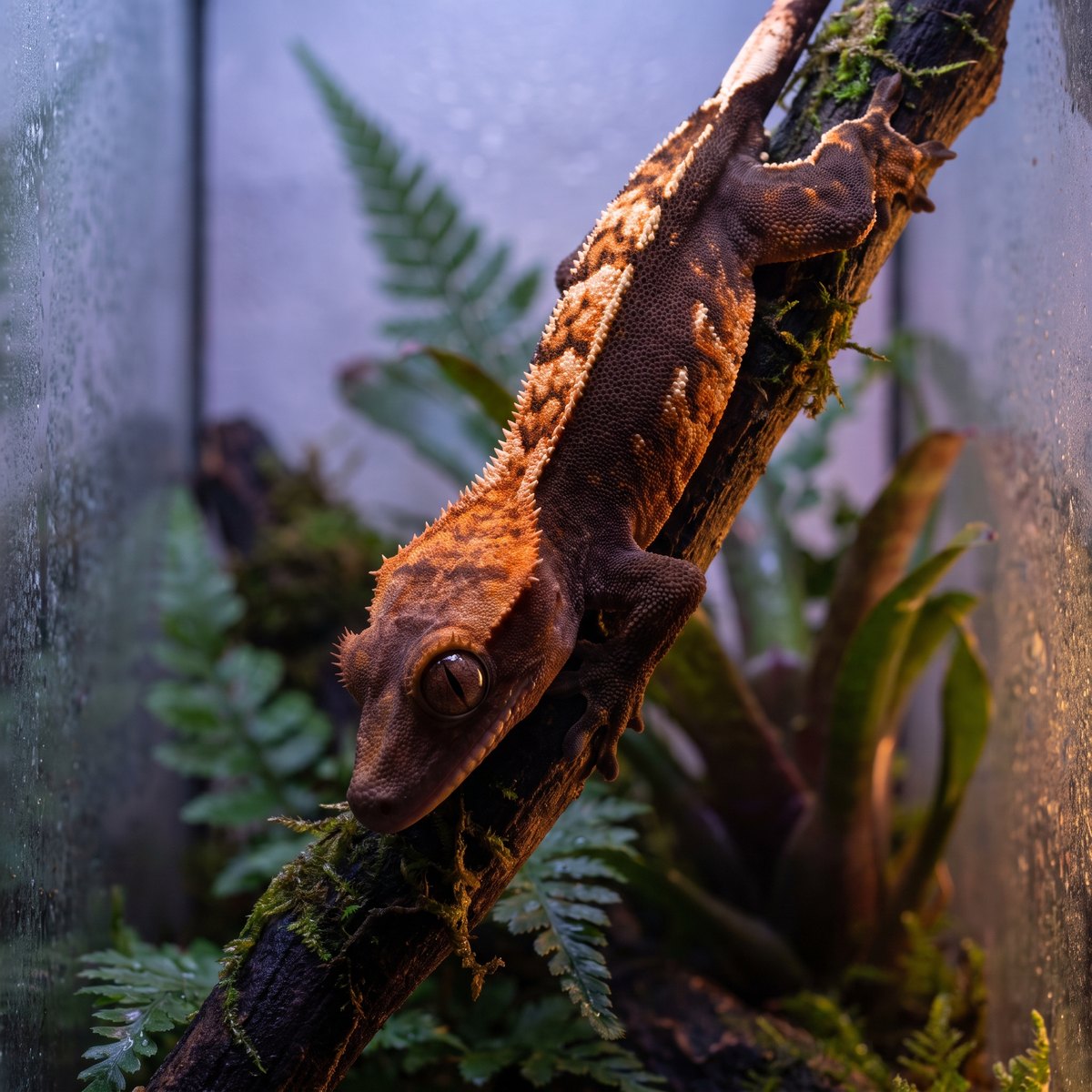
Nocturnal, arboreal, and happiest when the lights go down.
Husbandry
Keeping one well
Crested geckos are genuinely forgiving, which is why they're recommended to beginners — but the few things that matter, matter a lot.
Enclosure
18×18×24″ front-opening terrarium for an adult. Juveniles do better in something smaller — a large tub or 12×12×18″ — until they're feeding confidently.
Temperature
72–78°F daytime, with a night drop into the mid-60s. Crested geckos are one of the few reptiles that suffer more from heat than cold; above 85°F is genuinely dangerous.
Humidity
60–80%. Mist heavily in the evening and let it dry out during the day. Constant saturation causes more problems than occasional dryness.
Diet
A quality prepared crested gecko diet is a complete food — no insects strictly required. We feed ours every other day and offer appropriately sized dubia or crickets weekly as enrichment.
Handling
Give a new animal a week to settle before handling. Then keep sessions short and low to the ground; they're fast, and they jump before you expect it.
Tails
A dropped tail doesn't grow back on this species, and it isn't a health problem — plenty of adults are tailless. It's cosmetic, not an emergency.
Still deciding?
Ask before you buy. We'd rather spend twenty minutes on email than have an animal go somewhere it won't thrive.